
Ask most people what powers artificial intelligence and they will say chips. Ask what powers the chips and the answer starts to involve precious metals. Silver in semiconductors and the electronics around them, platinum in data center hardware, and palladium in the tiny components that manage electricity are quietly becoming part of the AI story, and investors researching these metals usually want to know one thing: does the technology boom actually change the case for owning them?
The honest answer is that AI is reshaping demand rather than simply inflating it. The Silver Institute’s World Silver Survey 2026 names AI among the growth drivers inside an industrial market that is otherwise cooling, and the platinum market is posting industrial demand growth even as its overall demand shrinks.
This guide walks through what each metal actually does inside AI hardware, what the 2026 numbers show, and how a long-term investor might think about it. Everything here is education, not financial advice, and no demand trend, including AI, guarantees anything about future prices.
Is Silver Really Used in Semiconductors and AI Chips?
Yes, though not always where people expect. The wiring inside a modern processor is mostly copper, so silver’s role is less about the chip itself and more about everything that surrounds it. Silver is the most electrically conductive metal there is, which is why the Silver Institute lists electrical and electronics applications, from printed circuit boards to electrical contacts, among its largest industrial uses.
In an AI server, silver shows up in the solder and conductive pastes that attach components to boards, in the contacts and connectors that move signals between them, and in the power supply units that feed racks drawing far more electricity than ordinary servers.
Analysts at Shanghai Metals Market note that high-performance computing for AI has increased silver consumption in the semiconductor sector, with AI servers a specific source of growth. Multiply one server by the tens of thousands inside a single data center, and the connection between AI and silver demand stops being abstract.
The Numbers: What AI Is Actually Doing to Silver Demand
The headline figures cut both ways, and it is worth being precise. Global industrial silver demand fell about 3% in 2025 to 657.4 million ounces, and the World Silver Survey forecasts a further slip to roughly 640 million ounces in 2026.
The main culprit is solar: photovoltaic silver demand is forecast to drop 19% this year to about 151 million ounces as panel makers use less silver per panel. AI-related electronics are one of the offsets the Survey singles out, growth inside a market that would otherwise be shrinking faster.
Meanwhile, the silver market as a whole remains in structural deficit, meaning total demand has exceeded new supply. 2026 is projected to be the sixth consecutive year of shortfall, at roughly 46 million ounces. Even so, silver touched an eight-month low this July before recovering to around $57 per ounce, according to Trading Economics. Hold both facts at once: persistent deficits and AI demand did not prevent a sharp correction. Industrial demand is a driver, not a guarantee.
Platinum: The Quiet Beneficiary of the Data Center Buildout
Platinum in electronics is a smaller story by volume than silver, but 2026 has been notable. The World Platinum Investment Council forecasts platinum industrial demand to grow about 9% in 2026 even as total platinum demand falls, and it expects the market to post another supply deficit this year, with deficits persisting into the end of the decade.
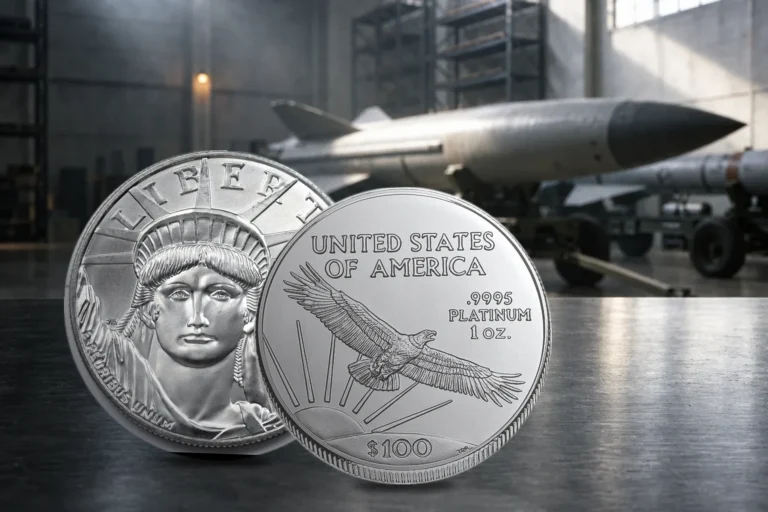
Where does the metal actually go? Platinum coats the spinning disks inside hard drives, where data centers still store enormous archives, and it appears in sensors, thermocouples, and the specialized glass used in displays. It is also central to hydrogen fuel cells, a technology some operators are testing for backup power.
For all of that, platinum trades near $1,610 per ounce as of late July 2026, close to its lowest level since November, a reminder that demand stories and prices can point in different directions for long stretches. We looked at the metal’s broader picture in our overview of platinum and palladium.
Palladium: A Smaller Market Moving the Same Direction
Palladium is best known for catalytic converters, but in electronics it earns its keep inside multilayer ceramic capacitors and plated connectors, components that appear by the thousands in servers and networking gear. The World Platinum Investment Council projects palladium deficits alongside platinum’s in the coming years. At around $1,260 per ounce in late July 2026, palladium trades far below its highs from earlier in the decade, and it remains the most auto-dependent of the three metals, which makes AI-related demand a supporting plot rather than the main one.
Which Precious Metal Matters Most for AI?
If the question is which metal the AI buildout touches most, the answer depends on how you measure.
| Metal | Role in AI hardware | 2026 demand signal |
|---|---|---|
| Silver | Solder, contacts, circuit boards, power supplies in servers and data centers | AI named a growth driver by the World Silver Survey; sixth straight annual market deficit |
| Platinum | Hard disk coatings, sensors, display glass, hydrogen fuel cells | Industrial demand forecast up 9% in 2026; another market deficit expected |
| Palladium | Multilayer ceramic capacitors, plated connectors | Deficits projected, but demand still dominated by autos |
By sheer volume, silver matters most: no other precious metal appears in as many parts of the electronics that make AI run. By concentration, platinum and palladium punch above their weight in specific components. Gold plays a role too, mainly in high-reliability connectors and bonding wire, though its demand is driven far more by investors and central banks than by technology. Orion has covered the wider theme in our earlier look at precious metals and artificial intelligence.
Does AI Demand Make These Metals a Good Investment?
Not automatically, and anyone who says otherwise is selling a story rather than describing the facts. Industrial demand is one driver among several, and it cuts both ways: manufacturers work constantly to use less metal per device, as the solar industry’s 19% reduction this year shows, and technology shifts can redirect demand quickly.
Silver, platinum, and palladium are also meaningfully more volatile than gold, with prices that swing on factory output and auto sales, not just investor sentiment. Prices for all three fluctuate, and past performance does not guarantee future results.
What the AI story does offer is a structural point: unlike gold, most industrial silver, platinum, and palladium is consumed, and much of it is not economically recycled. That is why these metals behave differently from gold in a portfolio, part commodity, part store of value.
Many financial commentators cite roughly 5 to 15% of a portfolio in precious metals overall, often with gold as the anchor and smaller allocations to silver or platinum group metals, and the right mix depends on your risk tolerance, age, and retirement timeline, which is worth discussing with your financial and tax advisors. If you hold only gold today, the takeaway is not to chase a trend; it is simply that diversification exists within precious metals too.
How to Own Silver, Platinum, and Palladium the Simple Way
You do not need to pick semiconductor stocks to add these metals to your savings. Orion Metal Exchange helps everyday investors own the physical metals themselves: browse our silver, platinum, and palladium products, follow the market on our live price charts, and see what you would pay before anyone calls you, because we publish our product prices online and our approach is no-pressure by design.
Silver can also live inside a retirement account. Our dedicated SDIRA department can help you place IRS-eligible silver or platinum in a tax-deferred self-directed precious metals IRA with approved depository storage, a structure we explain in our physical silver IRA guide. Consult your tax advisor regarding your individual circumstances.
Curious where these metals could fit alongside gold in your plan? Request Orion’s Free Investor Kit and a dedicated IRA specialist will walk you through your options, with no pressure and no obligation.
Silver, Platinum, and AI FAQs
Do AI chips use silver?
The processors themselves rely mostly on copper wiring, but the hardware around every AI chip depends on silver: solder and conductive pastes, circuit board contacts, connectors, and server power supplies. That is why analysts track AI server production as a source of silver demand growth even though silver is not the main metal inside the chip die.
What technology uses the most silver?
Electrical and electronics applications are collectively the largest industrial user of silver. Solar panels remain the single biggest application, at a forecast 151 million ounces in 2026 even after a 19% reduction, followed by the broad electronics category that includes semiconductors, circuit boards, and contacts.
Is platinum used in computers and data centers?
Yes. Platinum alloys coat the magnetic platters inside hard disk drives, which data centers still use for large-scale storage, and the metal appears in sensors and specialized glass. Hydrogen fuel cells, another platinum application, are being tested as backup power for data centers.
Will AI demand push silver prices up?
It could contribute, but it is no guarantee. Silver has run a supply deficit for six straight years and AI demand is growing, yet the price still fell to an eight-month low in July 2026 when interest rate expectations shifted. Demand from technology is one input among many, alongside the Fed, the dollar, and investor flows.