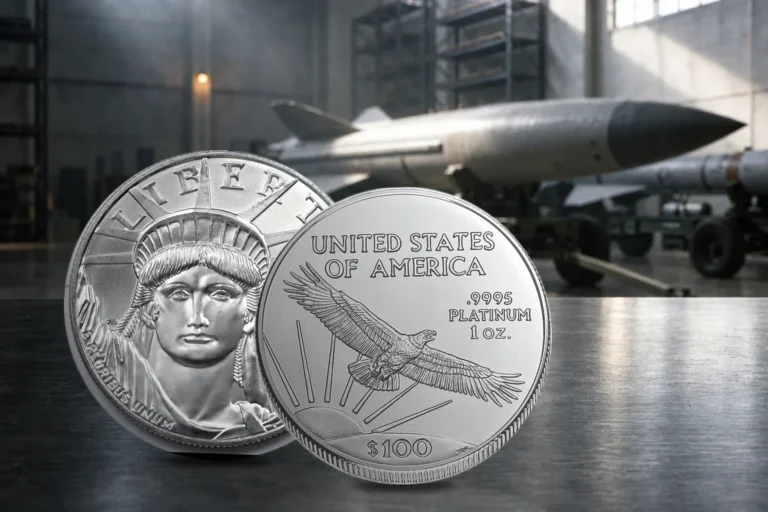

When a precious metals IRA owner dies, the account does not automatically become a collection of personally owned coins or bars. The custodian handles the beneficiary process, and IRA-owned metals remain under a custodial storage arrangement unless a distribution or other authorized transaction is processed.
Dealing with the documents can be overwhelming, particularly if someone else previously managed the account. Remember that you don’t have to make decisions about every single coin during your initial phone call. Simply begin by identifying the IRA administrator and figuring out what details you still need.
What happens to an IRA when you die depends on the account type, the beneficiary, and the applicable distribution rules. The IRS distinguishes deaths before 2020 from later deaths. This guide focuses on an original owner who died in 2020 or later, rather than coins inherited outside an IRA.
Start With the IRA Custodian
Notify the custodian listed on the account statement and request its beneficiary claim instructions. Ask which death and identity documents it needs, how to submit them securely, and who can give instructions while the claim is being reviewed. Do not assume that being named in a will gives you authority to direct the IRA.
Before discussing a sale or withdrawal, gather or request:
- The account ID, the exact date of the owner’s passing, and whether the account is a Traditional or Roth IRA.
- The beneficiary designation on file, including any contingent beneficiaries and the share assigned to each recipient.
- Up-to-date statements showing the exact metals held, where they are stored, and the current schedule of administrative fees.
- A record of any withdrawals the owner already took, plus confirmation of whether any mandatory distributions are still owed for the year they died.
Keep questions about beneficiary eligibility separate from questions about the metals. The IRS beneficiary guidance explains why the relationship to the owner and the owner’s required beginning date matter. That date is the legal starting point for required minimum distributions, not simply a birthday.
What Happens to the Physical Metals?
A change in beneficiary does not itself instruct a depository to ship the metals to a home. Custody, account records, and any proposed distribution need to be coordinated with the custodian. Confirm whether the existing storage arrangement can continue; do not assume every provider handles an inherited account the same way.
For example, GoldStar Trust’s precious metals guidance requires IRA assets to remain in custodial care until distribution. Its forms page includes both inherited precious metals account paperwork and separate transaction instructions. These are examples of one custodian’s process, not a universal checklist or a statement about which custodian holds your IRA.
The custodian and depository are not interchangeable. One administers the account; the other stores the metals under the custody arrangement. Orion’s precious metals IRA overview explains the separate roles involved in holding physical metals through an IRA.
Store the account documents alongside the metals inventory. If a specific statement brings up a question, jot it down right next to that item. This provides a focused starting point for your next discussion, saving you from having to dig through disorganized papers again.
How IRA Beneficiary Rules Change the Options
If the Beneficiary Is a Spouse
Under IRS Publication 590-B, a surviving spouse may keep beneficiary status or, when eligible, treat the IRA as their own or roll eligible amounts into their own IRA. Treating the inherited account as their own requires sole-beneficiary status and an unlimited right to withdraw. Required distributions cannot be rolled over.
These choices are not interchangeable. Ask the custodian and a qualified tax professional how each would affect the account before signing transfer or ownership paperwork.
If the Beneficiary Is Not a Spouse
The IRS states that a non-spouse cannot treat an inherited IRA as their own, add contributions, or roll it into their personal IRA. A direct trustee-to-trustee transfer is permitted when the receiving IRA remains in the deceased owner’s name for the beneficiary. This is different from receiving the assets personally and trying to redeposit them.
Some non-spouse beneficiaries qualify for special treatment. The IRS identifies eligible designated beneficiaries including the owner’s minor child, a qualifying disabled or chronically ill individual, and someone not more than 10 years younger than the owner. An adult child is not automatically in an exception category.
If a Trust, Estate, or Missing Designation Is Involved
Ask the custodian to explain the account agreement’s default-beneficiary provisions. A missing designation does not justify assuming the same outcome for every IRA. Trusts, estates, multiple beneficiaries, and disputed claims need individual review; involve the estate’s legal representative where appropriate. Fidelity’s inherited IRA guidance also distinguishes beneficiary arrangements and situations that need professional help.
Keeping Metals, Selling Them, or Taking a Distribution
There are two separate questions: what will the IRA hold, and what will leave the IRA? GoldStar’s transaction forms distinguish a precious metals sale instruction from a distribution request. The options available in a particular inherited account depend on its terms and the beneficiary’s required distribution schedule.
| Possible action | What happens | What to confirm |
|---|---|---|
| Keep eligible metals in the IRA | The metals remain IRA assets under the custody arrangement. | Storage, ongoing costs, and required distributions. Keeping metals does not suspend deadlines. |
| Sell metals inside the IRA | The account receives cash from the sale. Cash can remain inside the IRA. | Which precious metals company is designated on the account, the sale terms, and whether a separate cash distribution is also being requested. |
| Receive cash or physical metals | Assets leave the IRA through a distribution. Taking metal is an in-kind distribution. | Eligibility, valuation, reporting, delivery costs, and the applicable tax treatment. |
Selling an investment within a traditional IRA is not, by itself, a distribution to the beneficiary. IRS Topic 451 explains that amounts in a traditional IRA, including earnings, generally are not taxed until distributed. A sale with proceeds left in the account is therefore different from a withdrawal.
An in-kind distribution is not outside the reporting rules merely because no cash changes hands. The IRS instructions for Form 1099-R require distributed property to be reported at its fair market value on the distribution date. Ask the custodian how it values the specific products and arranges any delivery.
Prior to approving any transactions, simply ask: “Does this alter the IRA’s holdings, or does it withdraw assets from the account?” Make sure to get a written explanation of the process from the custodian before you give the green light.
What Tax Questions Need a Separate Review?
Traditional and Roth Accounts Are Different
Taxable distributions from an inherited traditional IRA generally count as ordinary income. It is too broad to say every dollar is taxable: IRS Publication 559 explains that nondeductible contributions require an allocation between taxable and nontaxable amounts. Ask about any records showing after-tax contributions, including Form 8606.
For an inherited Roth IRA, qualified distributions are generally free of federal income tax. Publication 559 explains that a payment to a beneficiary after death is qualified when the owner’s applicable five-tax-year period has been met. If it has not, earnings may be taxable under the Roth distribution rules. Inheritance does not make every Roth withdrawal automatically tax-free.
An IRA Is Not the Same as Personally Owned Inherited Gold
Do not apply a date-of-death step-up to the untaxed balance of a traditional IRA as though it were personally owned gold. The IRS treats the taxable inherited IRA balance under its income-in-respect-of-a-decedent rules. A metals valuation helps with account administration; it does not erase deferred income tax.
For distributions to a beneficiary because of the owner’s death, the IRS generally provides an exception to the 10% early-distribution tax. That exception does not remove ordinary income tax. A spouse who treats the account as their own must consider the rules applying to their own later withdrawals.
Consult your tax advisor regarding your individual circumstances.
Check Distribution Deadlines Early
First, ask whether any required minimum distribution, or RMD, remains due for the year the owner died. The IRS says the year-of-death obligation is the amount the owner was required to withdraw but had not withdrawn, if any. This is separate from the beneficiary’s later schedule.
For many designated beneficiaries who do not qualify for an exception, the account must be fully distributed by December 31 of the tenth year following the owner’s death. The IRS RMD guidance identifies exception categories. It is not a rule that every non-spouse beneficiary follows in exactly the same way.
Do not assume that the ten-year deadline means nothing is due earlier. Under the IRS final distribution regulations, a designated beneficiary subject to the ten-year rule generally also has annual RMDs when the owner died on or after the required beginning date. If the owner died before that date, the ten-year rule generally does not require annual withdrawals before the final year.
Make a note of any requirements or fees, who is responsible for processing them, and the deadlines for submitting the paperwork. Keep this information with the rest of the account files so that the next steps are obvious to anyone assisting with the estate.
Inherited Precious Metals IRA FAQs
What Happens to an IRA When the Owner Passes Away?
The account administrator validates the heir’s claim and explains the available options for managing the account. The beneficiary designation, account terms, and applicable rules determine the next steps; physical metals are not automatically sent to the heir.
How Do You Cash Out a Gold IRA?
Contact the precious metals company designated on the account to arrange the sale and send the proceeds to the custodian. To withdraw the funds, request a separate distribution from the custodian.
Do You Have to Pay Tax on Inherited Gold?
First establish whether the gold was personally owned or held in an IRA. With IRA metals, review the account type and taxable portion of any distribution, not just the metal’s value.
What Is the Smartest Thing to Do With an Inherited IRA?
No single choice suits every beneficiary. A key first step is to identify the precious metals company designated on the account. Confirm your beneficiary status, the account’s procedures, and applicable deadlines with the custodian, then discuss your options with qualified professionals.
How Orion Can Help
Orion Metal Exchange’s in-house IRA department can explain its precious metals services and coordinate with custodians and depositories. Contact Orion to ask what assistance is available for the metals in a specific account. Beneficiary claims and distribution processing remain matters for the custodian; legal and tax questions belong with qualified professionals.
Have your account statements and a list of unanswered questions ready. A successful initial discussion should end with you having a clear understanding of who is responsible for each step of the process.
Important Disclosure
This article is for educational and informational purposes only. It does not constitute tax, legal, accounting, financial, investment, or trading advice, or a recommendation to buy, sell, or hold any precious metal or other product. Orion Metal Exchange does not provide financial or tax advice.
Precious metals can fluctuate significantly in value and can be volatile. Past performance does not guarantee future results. IRA and tax rules can change and vary with individual circumstances. Consult qualified financial and legal professionals as appropriate. Consult your tax advisor regarding your individual circumstances.