The U.S. dollar just had the worst start of any year since 1973 and the weakest performance since end of the gold standard. The greenback dropped more than 10% since January and has  exhibited significant weakness versus major currencies like the Swiss franc, euro and British pound. This raises big concerns about the dollar’s standing on the world stage and is fueling chatter about the looming threats to American exceptionalism and dollar dominance.
Debt Trumps the Dollar
President Trump signed his signature legislation, the One Big Beautiful Bill” on July 4th and according to the Congressional Budget office, it will add another $3.4 trillion to the national debt over the next decade. America’s debt just eclipsed $37 trillion, which reflects how much money the federal government owes to its creditors both domestic and foreign.
According to the Bipartisan Policy Center, heavy federal debt loads can reduce confidence in the dollar, weaken the U.S. economy, and impact our monetary dominance around the world:
“The growing U.S. national debt may diminish the dollar’s global preeminence and U.S. leadership on the international stage. It could mean a loss of the exorbitant privileges the U.S. enjoys, which would lead to lower economic growth, higher unemployment, and lower equity wealth in the long run. The weakening of the dollar’s status could reduce U.S. businesses’ attractiveness to global credit and capital markets, leading to higher barriers to financing new investments and expanding operations. With America’s fiscal trajectory set to worsen and seemingly no appetite among leaders in either party to address it, investors’ strong faith in the country’s ability and commitment to meet its debt obligations could begin to waver.”[1]
[1] https://bipartisanpolicy.org/explainer/why-the-national-debt-matters-for-the-dollar-and-global-economic-strength/
Trade and Tariff Fallout
In addition to a greater debt load, there has been a dramatic upheaval in U.S. trade policy since the start of Donald Trump’s second term. America’s new confrontational trading posture and tariff war has resulted in everything from market volatility and economic uncertainty — to foreign retaliation and import imbalances
Currency traders have suddenly become bearish on the buck, and there is now a measurable erosion of confidence in the dollar. And while some expected tariffs to increase the value of the dollar, instead it collapsed in the first half of this year.
The Council on Foreign Relations has five possible theories as to why tariff have dramatically devalued the dollar:
1) The tariffs are a tax hike, and fiscal consolidation is bad for the dollar

Absent any offsetting tax cuts and even after considering the impact of routing trade around the tariffs, the tariffs would likely generate a fiscal consolidation of over 1 percent of U.S. GDP. The resulting expected slowdown has led the market to expect that the Fed will cut the U.S. policy rate, which makes it less rewarding to hold short-dated U.S. financial assets.
2) A recession isn’t good for U.S. equities, and a lot of foreign investors now hold as many equities as bonds
Many analysts now expect a significant downturn in the U.S. in Q2 and Q3. That should be bad for equities, and the long-run impact of the tariffs on certain stocks is unlikely to be positive. Apple, for example, now faces a 20 percent tariff on phones imported from China (from the “fentanyl” national security case) and a 10 percent tariff on phones imported from India, with the risk of more tariffs.
3. China held the line
Trump’s first term trade war was largely directed at China, and China responded to tariffs by letting the yuan slide. That was a relatively easy pressure valve to release back in 2018 and 2019, as the yuan started the trade war at a relatively elevated value and China was comfortable letting the yuan fall. A weak yuan in turn led other Asian currencies to fall in sympathy. But with the yuan already at long-term lows (around 7.3) China has been reluctant to allow the yuan to move—and risk disrupting the (modest) rally in Chinese assets observed in 2025.
4. Europe got a vote
The initial Trump trade assumed that Americas trading partners wouldn’t change their policies to make their currencies more attractive. That turned out to be wrong. Germany dropped its policy of self-imposed austerity—and allowed more borrowing for both investment in its security and investment in its infrastructure. Sweden too. Even the Irish are reportedly now ready to spend a bit more on defense. Fiscal easing in Europe’s previously frugal North should help support European growth.
5. Trump’s America First policies have diminished the global appeal of the dollar
Trump wants the dollar to remain the world’s reserve currency. But his tariffs and threats against American allies have potentially introduced a risk premium into dollar assets. A U.S. that trades less makes holding an asset that is accepted by the dollar payment network worth a bit less. And if U.S. allies fear that they might be coerced by an “America first” President to pay for the security provided by an alliance with the U.S. through a tax on their U.S. holdings, well, that makes dollar claims on the U.S. a bit riskier.
The Dollar-Busting BRICS Agenda
The BRICS alliance (Brazil, Russia, India, China, South Africa, Egypt, Ethiopia, Indonesia, Iran and the United Arab Emirates) has made no secret of its desire to either replace or circumvent the U.S. dollar in world trade. The partnership is actively looking to reduce dollar dependance, source alternative payments systems, and/or promote its own currency to increase the group’s influence on the world stage.
 BRICS started as a group of emerging nations looking for greater influence and exposure to the world economy, but it has become a much more imposing alliance. From its founding back in 2009 by original members Brazil, Russia, India, China and South Africa — it has grown to 10 full member nations that account for roughly half of the world’s population and 40% of the global economy.
“At the time of the first summit, BRICS countries held only about 10 percent of IMF quotas, a share that did not reflect the true size and growing influence of their economies. BRICS—particularly China—has long advocated for a comprehensive review of IMF quotas based on the established formula, arguing that their economies have continued to outpace those of many advanced nations … The rise of BRICS is undeniable, and its membership is expanding—new members include Egypt, Indonesia, the United Arab Emirates, and possibly Saudi Arabia—making it a platform for nearly all emerging markets. But even just measuring the original BRICS nations by their share of global gross domestic product (GDP), energy resources, and population shows that the group has nearly taken over the West.”
There’s no doubt that the BRICS alliance is fueling global de-dollarization efforts. The coalition of governments has been actively exploring the development of a new currency to compete with the dollar. And as the partnership gains economic power — their efforts to insulate themselves from U.S. sanctions and undermine dollar dominance in global trade, finance and influence will continue to weigh heavily on the greenback.
And Along Came Gold

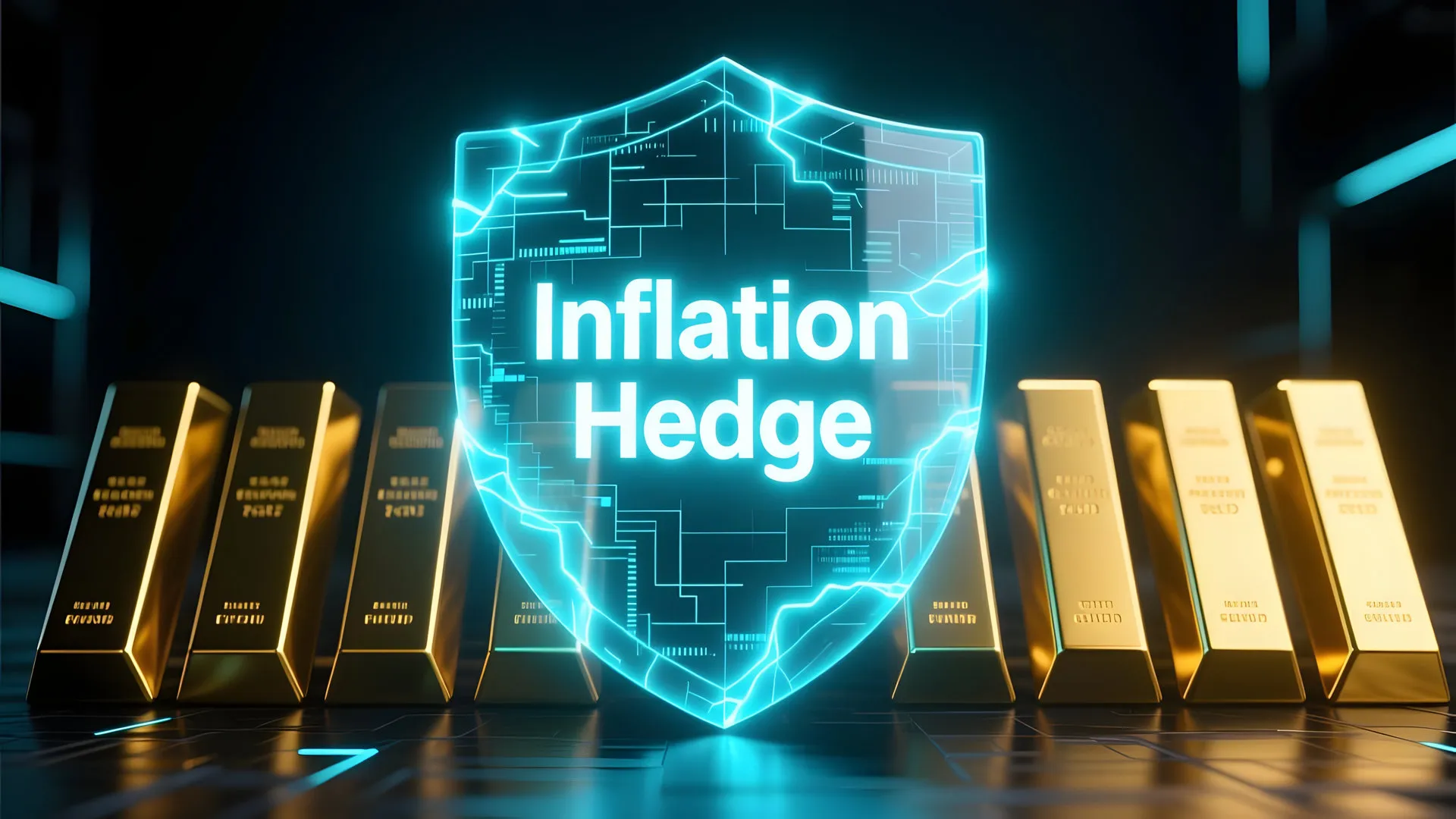
As governments shift away from the U.S. dollar as the primary currency of trade and international transactions, demand for American currency will weaken and gold will benefit. Perhaps this is why central bank gold buying is at record levels for the fourth, consecutive year. Clearly, the world’s monetary authorities are hoarding gold to diversify their reserves away from the dollar and to protect their economies from the economic uncertainty of de-dollarization.
“Central banks have been stocking up on gold. They bought over 1,000 tonnes of the precious metal last year, double the average amount purchased in the previous decade, according to a European Central Bank report …. global holdings of gold by reserve banks increased to 36,000 metric tons in 2024, close to the record of 38,000 metric tons reached around 60 years ago … The stockpile of the yellow metal, matched with rising prices, made it the second-largest global reserve asset after the dollar in 2024.”
This article was brought to you by ORION METAL EXCHANGE,
a top-rated PRECIOUS METALS DEALER
with Best-in-Class CUSTOMER SERVICE.
Get a FREE Investor Kit and up to $30,000 in FREE metals (on qualifying purchases).
REPRESENTATIVES ARE AVAILABLE NOW AT: 1-800-559-0088