There has been a dramatic evolution in how we pay for things — from writing checks, to swiping cards, to tapping chips — we’ve moved from bank drafts, to credit cards, to digital wallets. Money is no longer what it used to be; it has gone from physical to intangible, from real value to representative value, and from something you can hold in your hand to something this sits in a mysterious encrypted data block.
Some would call this progress, but the world’s leading monetary authorities are actually doubling and tripling down on one of the oldest physical commodities known to mankind, and it is sending a powerful message about the real value of money.
The Role of Central Banks
 According to the Council on Foreign Relations, central banks are the “centralized” financial institutions of a given country like the United States, the United Kingdom, China, or a regional organization like the European Union. But they’re not at all like commercial banks.
“Central banks conduct monetary policy, using various tools to influence the amount of money circulating in an economy, interest rates charged on loans, and the rate of inflation … Central banks are essential institutions, typically focused on keeping prices stable, maximizing employment, and helping a country’s economy grow.”[1]
Suffice to say, these are important organizations. They help ensure global financial stability, encourage economic growth, increase consumption, and have been described as the lender of last resort. The European Central Bank (ECB) highlights the critical role that these monetary authorities play in a world that has been besieged by diplomatic challenges, changing trade relationships, and rising costs.
“The global economy has been undergoing a period of transformative change. Following the pandemic, Russia’s unjustified war against Ukraine, the weaponisation of energy, the sudden acceleration of inflation, as well as a growing rivalry between the United States and China, the tectonic plates of geopolitics are shifting faster … Central banks must provide for stability in an age that is anything but stable.”[2]
The world’s central banks are the joists and support beams of the entire global financial system. So, when they take unilateral and unprecedented action — smart investors should take note.
The Bullion Bonanza
The celebrated philosopher of the French Enlightenment, Voltaire, famously said that, “paper money eventually returns to its intrinsic value: zero.”
Indeed, ‘money’ is a medium of exchange. It is how we pay for and acquire goods, but its value has come under extreme pressure and central banks have responded in an historic way.
They are acquiring gold at the fastest pace since the U.S. Dollar left the gold standard.
In 2022, central banks added more than 1,100 tons of gold to their reserves — the highest level in 55 years and before the collapse of the Bretton Woods international monetary system. It is by far the most aggressive central bank gold grab in modern financial history.[3]
The buying trend continued into 2023 and 2024 and in the first half of 2025, they’ve already purchased 415 tons more. According to Goldman Sachs, they are the main catalyst of the current gold bull run.
“Central banks have emerged as a driving force behind the record-breaking bull market for gold, and while the true scale of their buying is shrouded in mystery, nobody expects them to stop. Globally, they are accumulating roughly 80 metric tons of gold a month, worth about $8.5 billion at current prices, analysts at Goldman Sachs estimate. Most of the buying is secret, although trade data indicates China accounts for a lot of the purchases, along with other unidentified buyers via Switzerland.”[4]
Are they buying record amounts of gold to prop up their economies? Or, are they holding gold as a hedge against out-of-control global debt? Perhaps, they realize that over the last 50 years money has fundamentally changed but over the last 5000 — gold hasn’t. One thing is for certain, central banks are worried about everything from the dollar, to debt, to technology, to territorial disputes.
What Keeps Central Banks Awake at Night?
A recent “Reserve Management” seminar held by multinational investment bank UBS, outlined the global risks that “keep central banks awake.”
“Geopolitics has overtaken economics as the dominant concern among central banks. This is not a marginal shift. It’s a reordering of priorities that reflects a world entering an extended period of fragmentation, conflict risk, and political volatility. Survey results show an overwhelming expectation of stagflation in the US, replacing last year’s cautious optimism around a soft landing. The rules of reserve management, as many participants noted, are being rewritten.”[5]
The seminar takeaway confirms that “gold remains central to this evolving playbook” as over 90% of surveyed institutions believe it will outperform over the next year.
 Central banks are also projected to keep buying up bullion. According to the
World Gold Council, the world’s reserve banks also have an overwhelmingly positive view of the precious metal with a record 95% expecting global central bank gold reserves to increase over the next 12 months.[6]
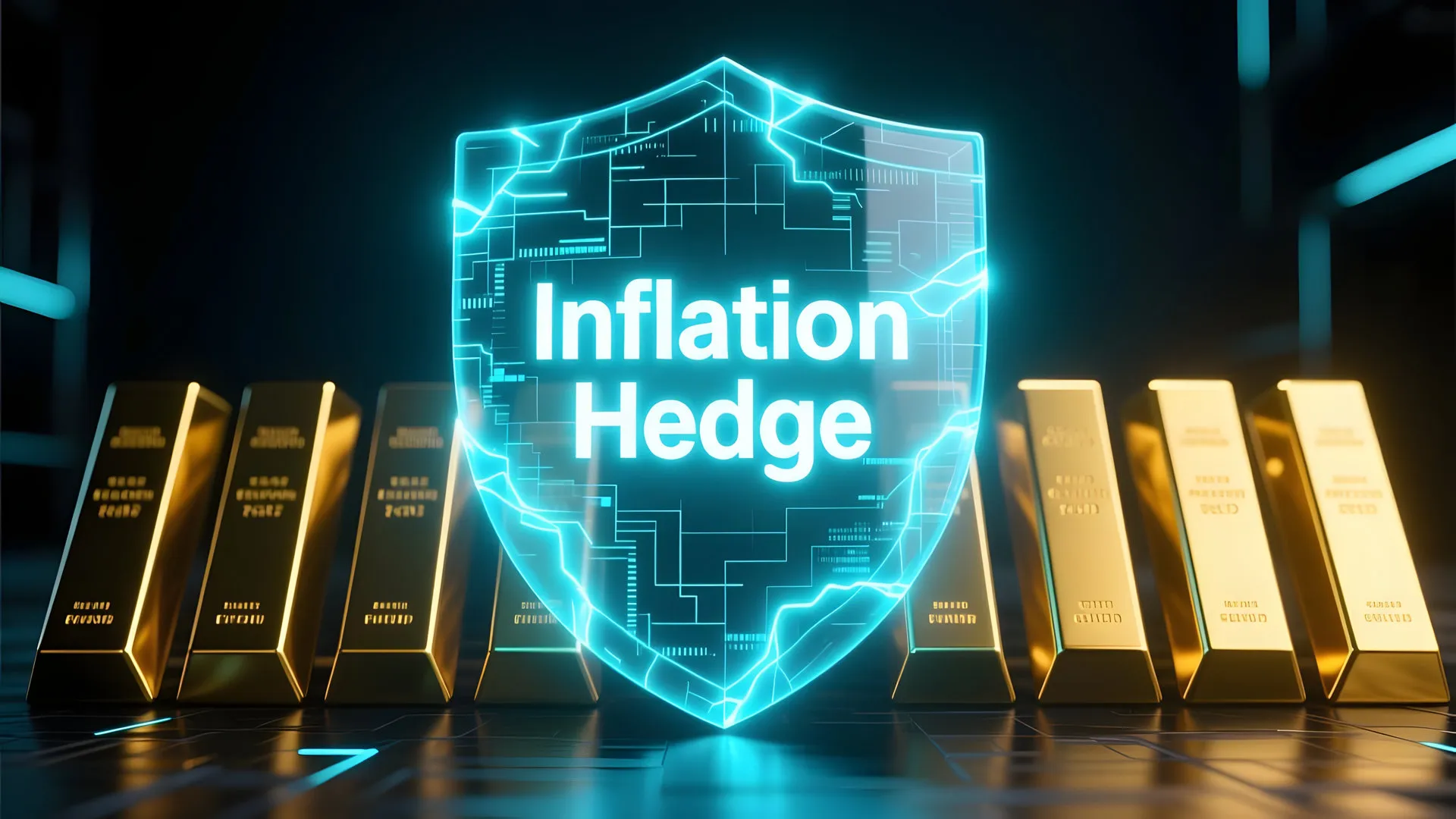
The world’s most powerful monetary authorities cite gold’s reliable performance during financial and economic crisis, its effectiveness as portfolio diversifier, and its success as an inflation hedge as compelling reasons for their record-setting allocations into gold.
Will “Real Money” Please Rise!
All of this begs the question — what does real money look like in 2025? Is it a plastic card, a mobile payment service, a digital network, a peer-to-peer transfer, or a QR code? Is it voice activated, biometrically authenticated, ‘buy now and pay later,’ contactless, or an automated smart contract?
Central banks have made the answer abundantly clear. It is chemical element and atomic number 79. It is a rare, yellow and lustrous metal that has been called the “Flesh of the Gods,” the metal of kings, the indisputable global monetary standard, and the world’s oldest safe haven.
This article was brought to you by ORION METAL EXCHANGE,
a top-rated PRECIOUS METALS DEALER with
Best-in-Class CUSTOMER SERVICE.
Get a FREE Investor Kit and up to $30,000 in FREE metals (on qualifying purchases).
REPRESENTATIVES ARE AVAILABLE NOW AT: 1-800-559-0088
[1] https://education.cfr.org/learn/reading/what-central-bank-and-what-does-it-do-you
[2] https://www.ecb.europa.eu/press/key/date/2023/html/ecb.sp230417~9f8d34fbd6.en.html
[3] https://discoveryalert.com.au/news/central-banks-buying-gold-2025-implications-trends/
[4] https://www.bloomberg.com/news/articles/2025-06-03/gold-market-s-record-breaking-rally-powered-by-central-bank-buying
[5] https://www.ubs.com/global/en/assetmanagement/insights/sovereign-investors/articles/what-keeps-central-banks-awake.html
[6] https://www.gold.org/goldhub/research/central-bank-gold-reserves-survey-2025