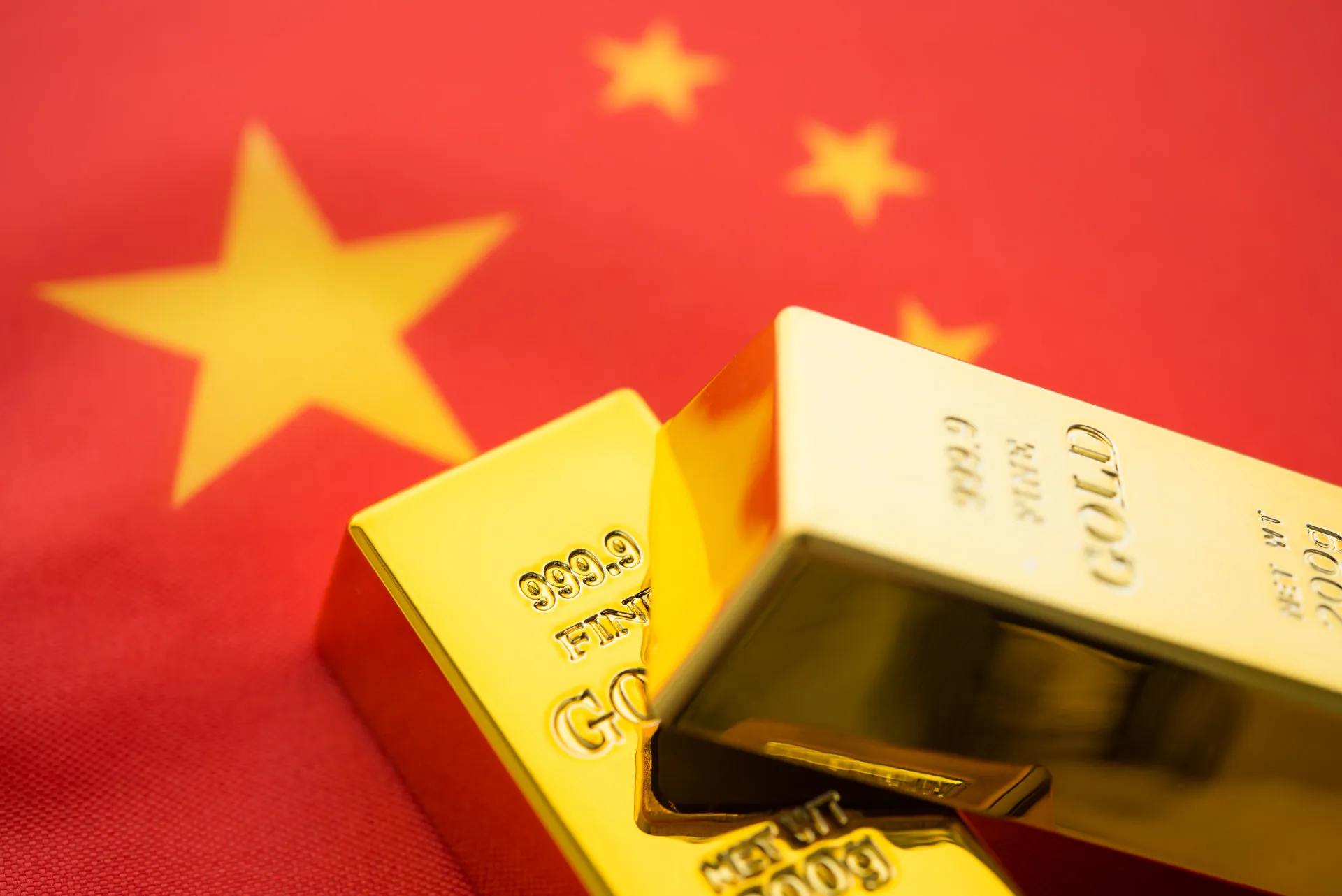
If you have seen headlines about China buying gold and wondered whether they matter to your own savings, the story is real, it is bigger than China, and it says more about how the world’s most conservative institutions view the next decade than any forecast ever could.
As of July 2026, the People’s Bank of China has added gold to its reserves for 20 consecutive months, the longest streak on record. Its June purchase of 15 tonnes was the largest since October 2023, and it came while gold prices were correcting sharply, not while they were rising. China is far from alone: in the World Gold Council’s 2026 survey, 89% of central bank reserve managers said they expect global gold reserves to keep growing over the next year, and a record 45% plan to add gold themselves.
This guide breaks down what China and other central banks are actually doing, why they are doing it, what it has meant for prices historically, and what a retirement investor can reasonably take away from it. As always, this is education, not financial advice, and no institution’s buying, however large, guarantees anything about future prices.
China’s Gold Buying Streak, by the Numbers
The official figures alone are striking. According to the World Gold Council’s July 2026 China market update, June’s 15-tonne purchase pushed China’s official gold reserves to 2,346 tonnes, about 8% of its total foreign exchange assets. The central bank has now reported 82 tonnes of purchases over its 20-month streak, including 40 tonnes in the first half of 2026 alone.
The unofficial figures may be larger. Goldman Sachs estimates that China acquired roughly 48 tonnes through London’s over-the-counter market in May, nearly five times the 10 tonnes it officially reported for that month. Nobody outside Beijing knows the true total, but analysts broadly agree the reported numbers are a floor, not a ceiling.
Chinese savers are participating too. Local gold ETFs added 29 tonnes in the first half of 2026, bringing their holdings to 277 tonnes, even as prices swung sharply. Buying interest, in other words, has continued through the correction rather than disappearing with it.
Why Is China Buying So Much Gold?
Reserve managers rarely explain themselves, but the motives analysts most often cite are practical rather than dramatic.
- Diversification away from the dollar: Gold is about 8% of China’s reserves, versus roughly 30% for Poland and far more for the United States and Germany. If Beijing wants its reserve mix to look more like other major powers, it has years of buying ahead of it, which is one reason many analysts treat China’s demand as structural.
- Insurance against sanctions: After Western governments froze a large share of Russia’s foreign reserves in 2022, many central banks re-examined how much of their wealth sits in other countries’ payment systems. Gold held at home answers to no foreign government, and reserve managers in the World Gold Council’s survey increasingly cite exactly that.
- A long de-dollarization project: China has spent years reducing its dependence on the dollar in trade and reserves. Analysts read the gold accumulation as one piece of that slow effort. That does not mean the dollar’s role is ending, and no one can say how far or fast this trend will run, but the direction of Beijing’s buying has been consistent.
It’s Not Just China: Central Banks Everywhere Are Adding Gold
Central banks as a group bought more than 1,000 tonnes of gold in each of 2022, 2023, and 2024, and another 863 tonnes in 2025, roughly double the pace of the previous decade. The buying has continued into 2026: the World Gold Council reported net purchases of 17 tonnes in April, led by Poland and China, and roughly 41 tonnes in May. The National Bank of Poland, the world’s largest official buyer in 2025, has lifted its reserves to nearly 600 tonnes, about 30% of its total reserves.
Here is the scoreboard as of mid-2026, using World Gold Council figures.
| Who | Position | What stands out in 2026 |
|---|---|---|
| United States | About 8,133 tonnes | Largest official holder by a wide margin |
| China (PBoC) | 2,346 tonnes, 8% of reserves | 20 straight months of buying, the longest streak on record |
| Poland (NBP) | Nearly 600 tonnes, about 30% of reserves | World’s largest official buyer in 2025, still adding |
| All central banks | 863 tonnes bought in 2025 | Fourth straight year of historically elevated buying |
Forward-looking sentiment is just as notable as the tonnage. In the World Gold Council’s 2026 Central Bank Gold Reserves Survey, 89% of reserve managers said they expect global central bank gold holdings to rise over the next 12 months, a record 45% plan to increase their own, and 84% believe gold will represent a larger share of total reserves five years from now. These are stated intentions, not commitments, but they come from the most risk-averse buyers in the financial system.
China Is Also Steering Retail Investors Away From Paper Gold
There is a second China story this summer that most coverage of central bank buying misses, and it speaks directly to individual investors. Effective July 24, 2026, China’s largest banks, led by ICBC, are ending leveraged retail gold trading linked to the Shanghai Gold Exchange, according to the South China Morning Post. Existing customers can close their positions or take physical delivery, and physical gold buying remains fully available.
The move is aimed at protecting retail investors from margin losses after a year of extreme price swings. It is not a ban on owning gold. If anything, the direction of the policy is the opposite: away from borrowed money and paper claims, toward outright physical ownership. That distinction, leveraged speculation versus long-term physical holding, is the same one that separates trading gold from using it to protect retirement savings.
What Does Central Bank Buying Mean for Gold Prices?
Here is where honesty matters more than a good story. Analysts at Goldman Sachs, ING, and elsewhere regularly cite central bank demand as a structural support for gold, one reason many year-end 2026 targets sit between $4,500 and $5,200 despite the correction. We covered those projections, and the more speculative $10,000 scenarios, in our breakdown of the gold price forecasts driving the next leg of the bull run.
But central bank buying does not guarantee higher prices, and 2026 has proven it: the deepest gold correction in years happened while central banks were setting purchase records. Institutional demand can put a floor under a market over long periods; it cannot stop the market from falling 25% when interest rate expectations shift. Anyone who tells you central bank buying makes gold a sure thing is overstating what the data shows. Gold prices fluctuate, they can be volatile, and past performance does not guarantee future results.
Should You Buy Gold Because Central Banks Are?
Not because of it, no. Central banks manage currency reserves measured in decades and never need to retire. Your situation is different, and copying an institution with an infinite time horizon is not a strategy.
What their behavior can offer is perspective. The most conservative institutions in the world have decided that holding a meaningful share of reserves in a physical asset with no counterparty risk is worth the cost, and they have kept buying through corrections rather than trying to time bottoms. Those habits are worth noticing: thinking in years rather than weeks, buying gradually (many long-term investors use dollar-cost averaging so a correction lowers their average cost), holding physical metal rather than leveraged paper, and keeping any position a sensible size. Many financial commentators cite roughly 5 to 15% of a portfolio in precious metals, and the right figure for you depends on your age, retirement timeline, and existing exposure, which is worth discussing with your financial and tax advisors.
If you already own gold, this year’s central bank behavior is a reason to feel steady rather than to churn your holdings. The institutions that study reserve assets full time kept adding through the same correction you sat through.
How Orion Metal Exchange Helps You Own What Central Banks Own
Central banks buy physical gold, not leveraged paper products, and that is exactly what Orion Metal Exchange helps everyday investors do. We publish our product prices online so you can see what you would pay before anyone calls you, and our approach is no-pressure by design.
You can follow the market on our live precious metals price charts, then browse widely recognized bullion like the American Gold Eagle on our gold products page. If your goal is retirement protection, our dedicated SDIRA department can help you roll an existing 401(k) or IRA into a tax-deferred self-directed precious metals IRA, with IRS-approved depository storage handled from start to finish. Consult your tax advisor regarding your individual circumstances.
Not sure where to start? Request Orion’s Free Investor Kit and a dedicated IRA specialist will walk you through your options, with no pressure and no obligation.
Central Bank Gold Buying FAQs
Is China still buying gold in 2026?
Yes. As of July 2026, the People’s Bank of China has increased its gold reserves for 20 consecutive months, adding 40 tonnes in the first half of 2026 and 15 tonnes in June alone, its largest monthly purchase since October 2023.
Who bought the most gold in 2025?
The National Bank of Poland was the world’s largest official buyer in 2025, and central banks as a group purchased 863 tonnes for the year. Poland has continued buying in 2026 and now holds nearly 600 tonnes, about 30% of its reserves.
Which country holds the most gold?
The United States holds the most official gold by a wide margin, roughly 8,133 tonnes. China’s reported holdings of 2,346 tonnes rank it among the top ten, though many analysts believe its true holdings are higher than the official figure.
Why do central banks buy gold?
In the World Gold Council’s 2026 survey, reserve managers most often cite gold’s performance during crises, its role as a long-term store of value, and the fact that it carries no counterparty or sanctions risk. Gold held in a nation’s own vaults does not depend on any other country’s promises.