
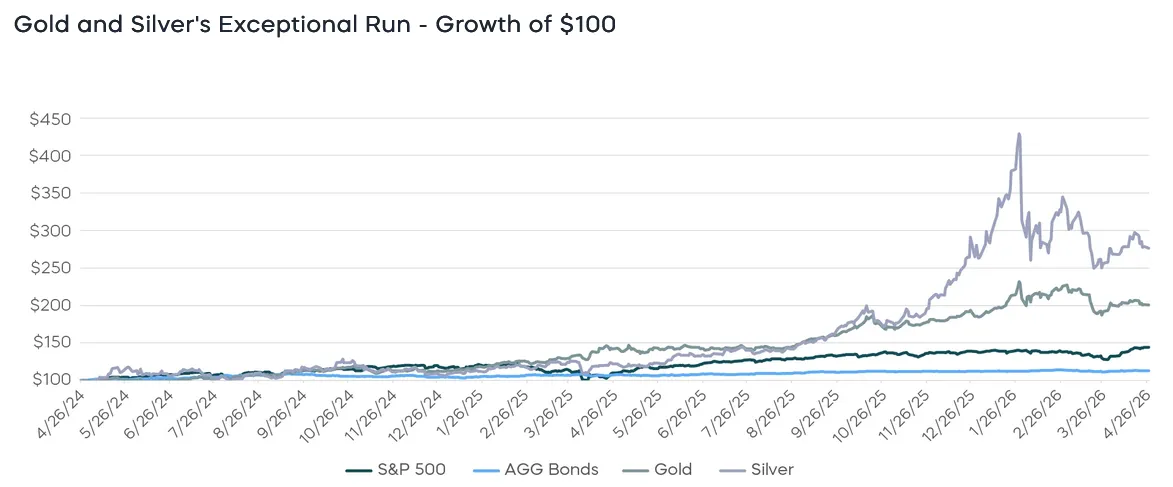
After several years of exceptional gains, gold and silver are taking a breather. So far this year, gold is down about 7%, while silver has fallen almost 18% as both metals undergo a healthy correction. Their historic bull market, which began in 2020, was fueled by inflation, geopolitical uncertainty, central bank buying, AI-driven industrial demand, and the global energy transition.
Little has changed. And with prices pulling back, many investors are asking the same question: Is this a buying opportunity?
Historically, market corrections have given long-term investors the chance to accumulate precious metals at more attractive prices before the next run up. While short-term volatility is normal, both history and today’s long-term fundamentals provide a valuable perspective on whether buying the dip makes sense right now.
The Case for Gold and Silver Hasn’t Changed
Short-term price volatility is a normal part of investing. Stocks, bonds, real estate, cryptocurrencies, and precious metals all experience pullbacks and corrections. Gold and silver are no exception. But short-term volatility doesn’t change the long-term reasons that investors hold precious metals.
Gold and silver have served as tangible stores of value for generations, helping investors preserve purchasing power, diversify portfolios, and hedge against the risks associated with paper currencies. Despite the recent correction, many retirees and pre-retirees continue to view gold and silver as important components of a diversified retirement portfolio for several reasons:
- “Traditional 60/40 portfolios don’t offer comprehensive diversification in all markets, especially when bond yields are low.
- ‘Real’ assets like gold and silver may offer meaningful diversification benefits.
- Precious metals have the potential to outperform during inflationary periods, when markets face financial or geopolitical stress, or when currency debasement is a concern.”[1]
These benefits remain relevant, particularly as many of the forces that supported precious metals over the past several years continue to shape the global economy.
With U.S. debt rising rapidly, de-dollarization gaining momentum, and geopolitical tensions continuing to mount, the long-term fundamentals supporting gold and silver are firmly intact. Central banks continue to accumulate gold as a strategic reserve asset at record levels. And silver continues to benefit from growing industrial demand driven by solar energy, electric vehicles, AI infrastructure, and global electrification.
While prices may fluctuate over the short term, gold and silver have historically helped investors reduce portfolio risk and improve diversification over the long run.
Downside Protection and Capital Appreciation
Successful long-term investing requires discipline. It means ignoring market noise, resisting the fear of missing out, and remaining committed to a well-defined investment strategy. Disciplined investors focus on consistency, patience, and prudent risk management.
 According to Main Street Capital, they also prioritize securing long-term wealth over chasing short-term trends.
“Disciplined investing is not about quick wins. it’s about building sustainable, long-term value. By regularly contributing to investments, diversifying portfolios, and reviewing your strategy periodically, you can weather market volatility and stay on track toward achieving your financial goals.”[2]
For those seeking a healthy mix of downside protection and capital appreciation, gold can be a smart choice. It’s a safe haven asset that is often uncorrelated to market sell-offs, routs, and periods of financial stress.
Silver complements gold because it serves a dual role both as a wealth preservation asset and a critical industrial metal used in modern technology and energy production.
“Most commodities do one job. Silver does two, and that is exactly what makes it one of the more interesting corners of the metals market to understand right now. It is a precious metal that investors reach for in uncertain times, in the same breath as gold. It is also an industrial workhorse, woven into solar panels, electronics, electric vehicles, and the data-center buildout powering artificial intelligence.”[3]
Although gold and silver serve different purposes within a diversified portfolio, both have historically preserved purchasing power over long periods. And over the past decade, each has roughly tripled in value.
Corrections Create Opportunities
Back in 2021, a Forbes article offered this headline, ‘Why You Should Buy the Dip in Gold.’
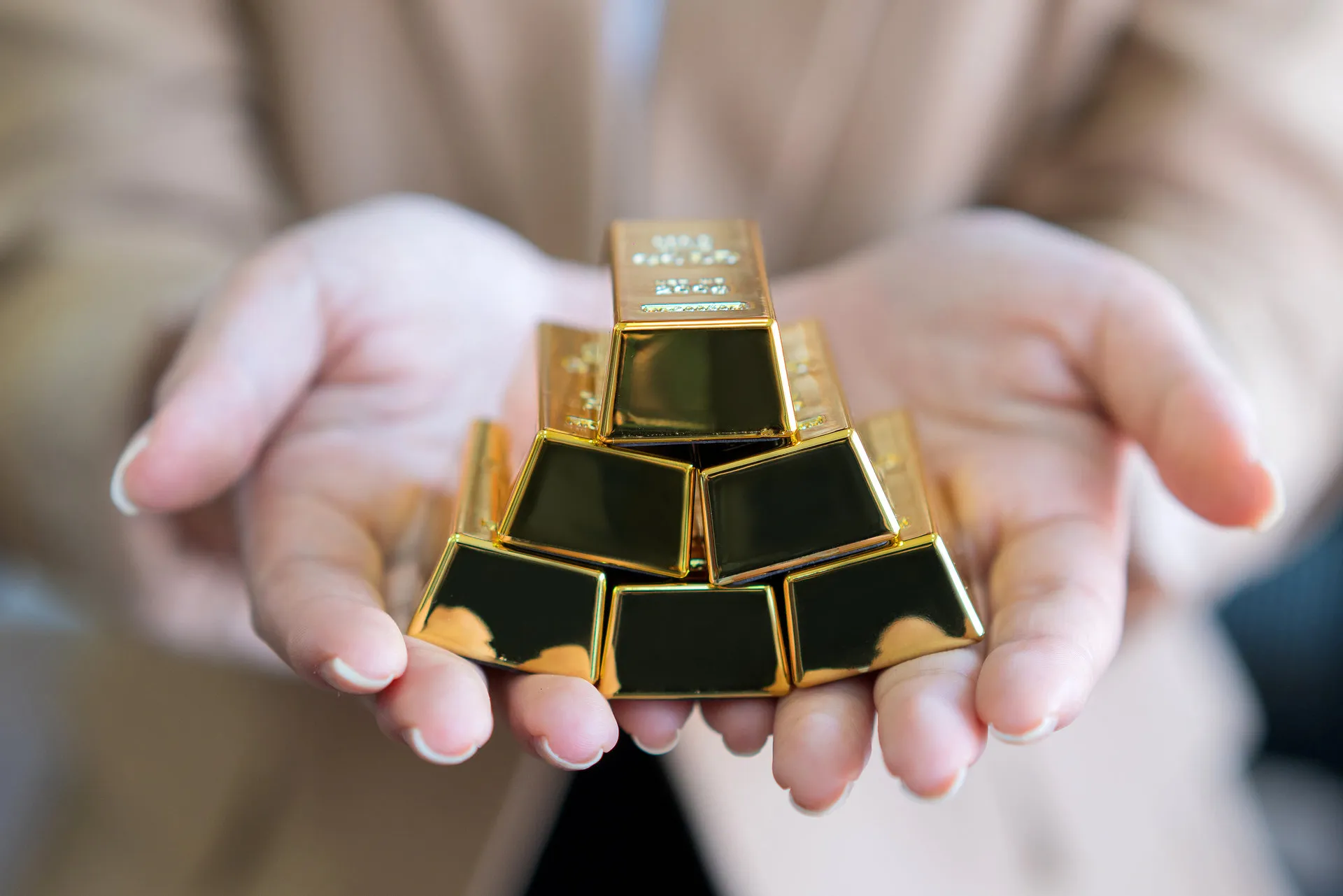 “Clearly gold has been a dislocated asset in this market and economic environment. But that creates an opportunity to see that dislocation corrected. In a world where asset prices are making new highs by the day, you can buy a dip in gold. For gold, fundamentally, the outlook is strong given the explicit devaluation of cash through unlimited Fed QE and seemingly unlimited deficit spending.”[4]
At the time, gold had rallied above $1,800 an ounce before retreating to roughly $1,700. An investor who purchased gold at the $1,700 per ounce “dip” price in March 2021 would have enjoyed a return of almost 140%. Gold’s subsequent advance was fueled by historic central bank buying, persistent inflation, and rising geopolitical tensions.
Last October there was a similar discussion about whether silver would break the psychological barrier of $50/oz and whether demand would propel it even higher.
“The silver all-time high was $49.95 per ounce, which it achieved on January 17, 1980. Now less than a dollar shy of that target, trading at the US$49.50 per ounce level, the white metal is at prices not seen since 2011. The current move in the silver price is being driven by persistent supply deficits in the face of increased demand for safe-haven investments, as well as industrial usage in solar panels and electric vehicles.”[5]
By the end of January 2026, silver shattered that barrier, climbing above $120 an ounce and delivering a return of more than 145% in less than four months. Silver’s price was propelled by heavy demand, particularly from the industrial sector, along with serious constraints and depleting stockpiles.
No one knows where gold or silver will trade next month or next year. Timing any market, including precious metals, is difficult. But history suggests that periods of price weakness often create attractive entry points for disciplined, long-term investors.
Simply stated, the current dip is an opportunity to buy gold and silver at lower prices and potentially maximize long-term gains. More importantly, it’s a chance to own assets that have historically helped reduce risk, preserve wealth, and provide what many investors value most during uncertain times: financial peace of mind.
ORION METAL EXCHANGE is a Leading Precious Metals Dealer
With Live Pricing, Low Commissions and Top-Rated CUSTOMER SERVICE.
Call Now for a FREE Investor Kit!
REPRESENTATIVES ARE AVAILABLE NOW AT: 1-800-559-0088
1 https://www.proshares.com/browse-all-insights/insights/gold-silver-long-term
2 https://mainstreetcapltd.com/how-disciplined-investing-builds-long-term-value/
3 https://ca.finance.yahoo.com/news/two-sided-metal-why-silver-131500913.html
4 https://www.forbes.com/sites/bryanrich/2021/05/06/why-you-should-buy-the-dip-in-gold/
5 https://investingnews.com/new-silver-price-era/