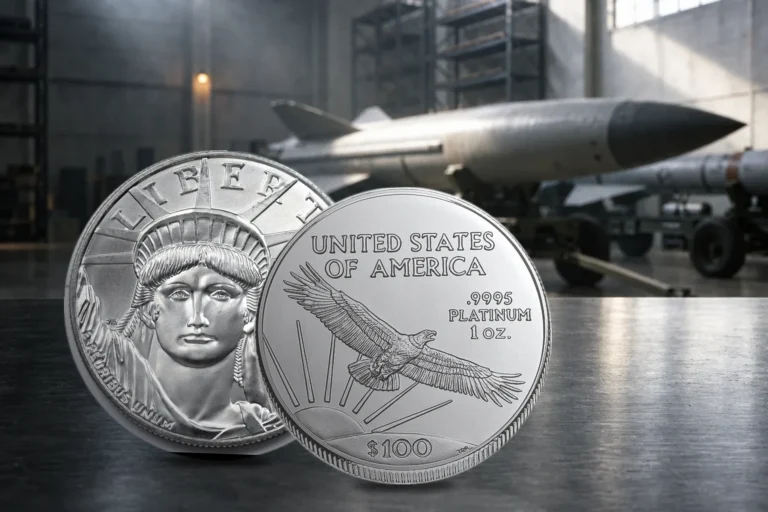

Gold has served as a reliable store of wealth for centuries. During periods of rising inflation, stock market volatility, banking uncertainty, and geopolitical instability, investors have consistently turned to physical precious metals for financial protection.
However, if you are new to the precious metals market, it is vital to understand a core truth: not all gold coins serve the same purpose. Some coins are minted purely for collectors and hobbyists. Others are specifically minted for serious investors who prioritize liquidity, stability, and long-term wealth preservation. For retirees, IRA investors, and individuals rolling over a 401(k), distinguishing between these two categories is the difference between a secure retirement and making a costly mistake.
If you are considering adding physical precious metals to your portfolio, this educational guide will explain exactly what makes a coin “investment-grade,” which coins historically perform best for long-term investors, and why precious metals remain the bedrock of modern retirement diversification strategies.
What Actually Makes a Gold Coin “Investment Grade”?
Investment-grade gold coins are valued strictly for their precious metal content, rather than for historical rarity, aesthetic collectibility, or numismatic value. They are widely traded and universally recognized by dealers and investors across the globe.
Here are the key characteristics that separate a true investment-grade gold coin from a collectible gold coin:
- High Gold Purity: Most investment-grade gold coins contain either 22-karat or 24-karat gold. Higher purity guarantees maximum gold exposure per ounce.
- Strong Market Recognition: Pure gold coins are universally accepted by dealers worldwide. Government-issued bullion dominates this space because investors inherently trust their authenticity and purity guarantees.
- Tight Buy/Sell Spreads: Investment- grade coins carry significantly lower premiums over the live spot gold price compared to collectible gold coins, allowing you to retain more of your actual investment.
- IRA Eligibility: A hallmark of investment-grade gold coins is their eligibility for inclusion in a self-directed Precious Metals IRA. IRS-approved bullion provides tax advantages while also diversifying your retirement savings. Firms like Orion Metal Exchange have a dedicated SDIRA department that will help investors seamlessly roll over an existing retirement account into a tax-advantaged Gold IRA.
Why Do Investors Buy Physical Gold Coins?
Before choosing which coin to buy, it helps to understand why long-term investors and retirees flock to physical gold in the first place.
Portfolio Diversification
Traditional retirement accounts are heavily concentrated in paper assets like stocks, bonds, and mutual funds. Physical gold provides a necessary counterweight during periods of market turbulence. Because gold has been inversely correlated with paper assets throughout most of history, it is can be a critical portfolio diversifier and can help reduce your overall portfolio volatility.
Inflation Protection
As governments print more money and the purchasing power of fiat currency (like the dollar) declines, gold can function as a store of value. Many investors view physical gold as the ultimate insurance policy against inflation, skyrocketing government debt, and unpredictable central bank policies.
Tangible, Direct Ownership
Unlike stocks, bonds, or ETFs, physical gold coins are tangible assets you can actually hold in your hand. Many investors prefer owning hard assets directly, particularly ones that are entirely independent of banks, financial institutions, or purely paper-based investment vehicles.
Long-Term Wealth Preservation
While gold has delivered a strong ROI in recent years, investors primarily hold gold for long-term portfolio protection. Retirees and investors alike often look to gold to preserve their purchasing power over decades, safely bridging periods of extreme economic uncertainty.
The Heavy Hitters: Which Gold Coins Are Most Popular?
Several government-backed bullion coins consistently dominate the global investment market. These coins are highly liquid, globally recognized, and form the foundation of countless retirement portfolios.
1. The American Gold Eagle
Issued by the U.S. Mint since 1986, the American Gold Eagle is arguably among the most popular bullion coins in the world. Its weight and purity are strictly guaranteed by the U.S. government.
- Why Investors Love It: Gold Eagles combine patriotic appeal (featuring the iconic Lady Liberty) with exceptional liquidity. Furthermore, the Gold Eagle’s 22-karat composition contains small amounts of copper and silver, making it highly durable and scratch-resistant.
- IRA Status: The American Gold Eagle is fully approved and highly recommended for Precious Metals IRAs.
2. The American Gold Buffalo
Introduced by the U.S. Mint in 2006 to meet the demand for purer gold, the American Gold Buffalo contains 99.99% pure 24-karat gold.
- Why Investors Love It: It offers the highest possible purity while still carrying the trusted backing of the U.S. government. Its stunning design, based on the historic 1913 Buffalo Nickel, gives it incredible market appeal.
- IRA Status: The American Gold Buffalo is fully approved for Precious Metals IRAs.
3. The Canadian Gold Maple Leaf
Produced by the Royal Canadian Mint, the Maple Leaf is one of the purest and most technologically advanced bullion coins available on the market today.
- Why Investors Love It: Containing 99.99% pure gold, the Maple Leaf features micro-engraved security elements that significantly reduce counterfeiting risks. It trades seamlessly on a global scale, making it perfect for international diversification.
- IRA Status: The Canadian Gold Maple Leaf is fully approved for Precious Metals IRAs.
4. The South African Krugerrand
Introduced in 1967, the Krugerrand was the world’s first modern bullion coin and is largely responsible for popularizing the private ownership of gold.
- Why Investors Love It: Krugerrands typically boast lower premiums over the spot price than their competitors. Their vast history and global recognition make them highly tradable.
- IRA Status: Standard Krugerrands are not eligible for Precious Metals IRAs due to IRS purity minimums, so confirm your account type before purchasing.
5. The Austrian Gold Philharmonic
Produced by the renowned Austrian Mint, these 24-karat coins feature intricate, musical-themed artwork honoring the Vienna Philharmonic Orchestra.
- Why Investors Love It: They contain 99.99% pure gold and are globally recognized and highly prized in the European market. They are an excellent choice for geographic diversification beyond U.S.-minted bullion.
- IRA Status: The Austrian Gold Philharmonic is fully approved for Precious Metals IRAs.
The Great Debate: 22K vs. 24K Gold Coins
The difference between a 22-karat gold coin and a 24-karat gold coin is one of the most frequent questions among first-time gold buyers. The truth is, one full-ounce 22K coin and one full-ounce 24K coin contain the same amount of pure gold (one troy ounce). The actual difference lies in the alloys added to the coins. See the comparison below.
| Feature | 24-Karat Coins (e.g., Buffalo, Maple Leaf) | 22-Karat Coins (e.g., Eagle, Krugerrand) |
| Purity | 99.99% pure gold | 91.67% pure gold (alloyed with other metals) |
| Durability | Softer metal; more prone to scratching | Highly durable; resistant to wear and tear |
| Primary Appeal | Maximum purity, strong international demand | Ruggedness, long-standing U.S. market trust |
The Bottom Line: For most long-term retirement investors, either option works, but it’s important to weigh factors like IRA eligibility and dealer buyback policies as well as the karat count.
Are Fractional Gold Coins Worth Buying?
Fractional gold coins contain less than one full troy ounce of gold, commonly minted in 1/2, 1/4, and 1/10-ounce sizes.
These smaller coins appeal to investors seeking a lower financial entry point or those who desire precise flexibility. If you experience a financial emergency, fractional coins allow you to liquidate a small, specific amount of gold without being forced to sell a full ounce.
However, be aware that fractional coins carry higher dealer premiums than spot prices. It costs the mint almost as much to produce a small coin as a large one. Retirement investors must evaluate whether the added liquidity and flexibility outweigh these slightly higher upfront costs.
Crafting Your Strategy: Allocation and Timing
How Much Gold Should You Hold?
There is no universal magic number that fits every portfolio. Many financial experts recommend that between 5% and 15% of total assets be held in physical precious metals. Others favor higher allocations under specific economic conditions like market volatility or a looming economic crisis. Your perfect allocation will depend on your retirement timeline, inflation expectations, current stock market exposure, and overall risk tolerance.
When is the Best Time to Buy?
Trying to perfectly time the daily fluctuations of the gold market is difficult. . Instead, long-term investors focus on gradual accumulation (dollar-cost averaging) and diversification. Historically, demand surges during periods of banking instability, recession fears, and geopolitical tension. Getting in early and holding steadily is generally much safer than trying to day-trade physical metals.
Logistics: Storage and Selling
Where Should You Store Your Gold?
Proper security and storage of pure gold is absolutely critical to wealth preservation.
- Home Safes: Offer direct, immediate access but require significant investments in physical security and private insurance.
- Bank Safe Deposit Boxes: Provide institutional security, but limit your access to banking hours and leave you vulnerable to bank holidays or systemic closures.
- IRS-Approved Depositories: The mandatory choice for Precious Metals IRAs. These highly secure, third-party vaults provide fully insured storage and handle all regulatory compliance.
How Do You Sell Gold Coins Later?
The biggest advantage of investment-grade bullion is its high liquidity. When it is time to take profits or liquidate your metals for retirement income, widely recognized coins are easily sold to dealers and exchanges worldwide. Your payout will be determined by the current spot price, the coin’s condition, market demand, and the specific dealer’s spread. Always work with highly reputable dealers who offer transparent, market-based buyback programs.
Coins vs. Bars: Which is Better?
While gold bars offer slightly lower premiums for institutional-sized purchases, coins are generally much better suited for retail retirement investors. Coins are easier to visually authenticate, enjoy stronger secondary market demand, and offer the flexibility of smaller denominations. Furthermore, sovereign government backing instills a level of trust that private mint bars sometimes lack.
Final Thoughts
Investment-grade precious metals continue to play a foundational role in modern wealth preservation strategies. Whether you are a retiree, an IRA investor, or a long-term saver, physical gold is rarely about chasing aggressive, short-term profits.
Instead, it is about building an impenetrable financial fortress. By selecting highly recognized, liquid, and IRA-approved coins like the American Gold Eagle, Gold Buffalo, or Canadian Maple Leaf, you are actively preserving your purchasing power and diversifying safely beyond paper assets. Understand your priorities, define your risk tolerance, and let investment-grade gold do what it does best: protect your wealth for the long haul.