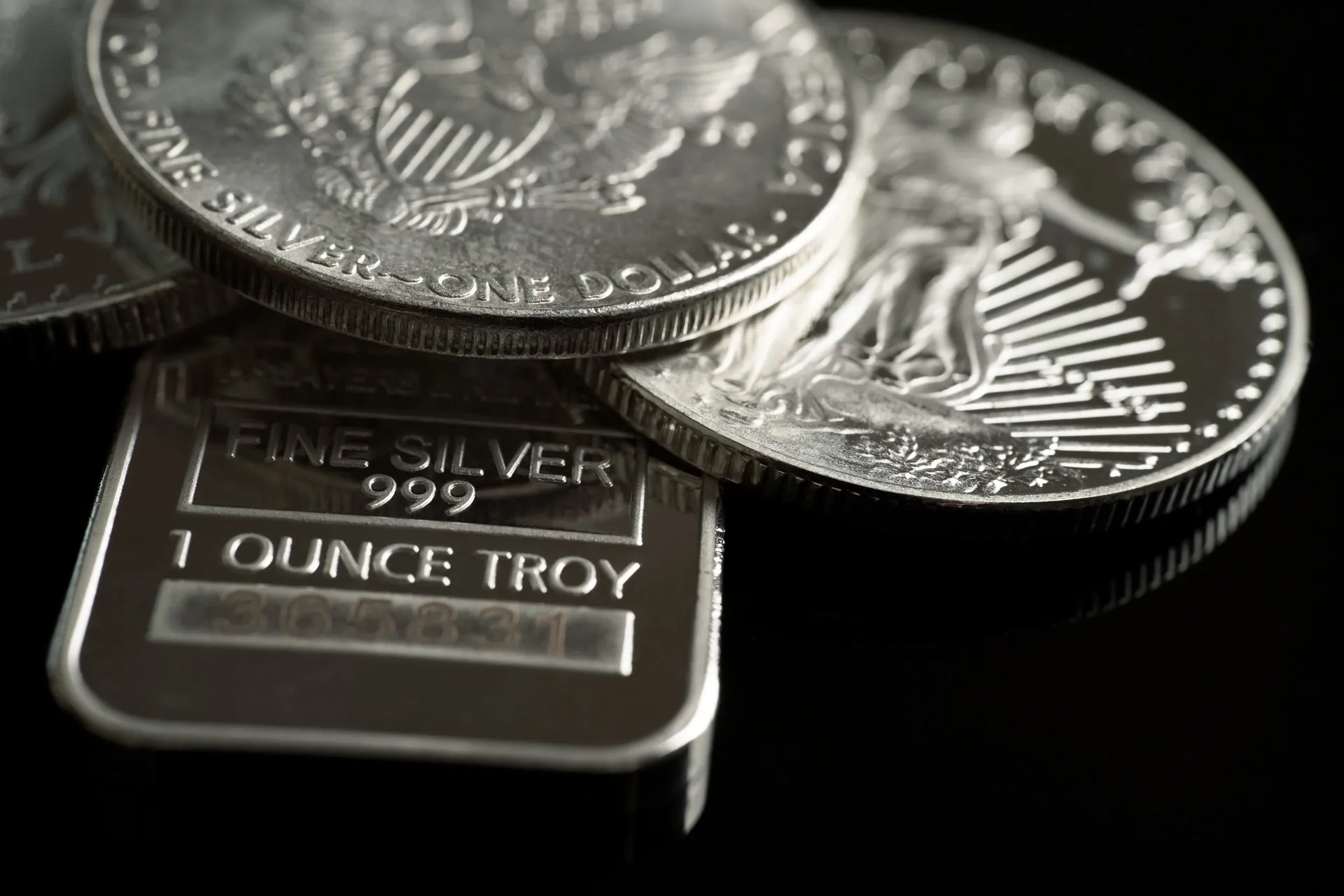
It seems that the mere mention of rate cuts, Fed easing, or a lower Federal Fund rate has a direct correlation and an almost immediate impact on gold prices. So, when optimism for rate cuts rises, the price of gold climbs right alongside it. Currently, the Chicago Mercantile Exchange’s (CME) FedWatch tool[1] has the odds of a rate cut at over 90%. Yes, you read that correctly — over 90%!

So, one could assume that gold prices will rise next week. Indeed, they likely will but why is that exactly?
It has a lot to do with gold’s attractiveness in a lower rate environment. It also reflects a weaker U.S. dollar and lower demand for dollar-dominated assets. And lastly, monetary easing raises concerns about a slowing and weakening economy. These are all conditions under which gold has historically thrived.
The current Federal Funds rate is 4.25% to 4.50% and most experts expect a 25-basis-point (0.25%) cut at the Fed’s meeting in the middle of next week which would reduce it to 4.0% to 4.25%.
A Crazy Little thing called “opportunity cost”
There has been a lot of discussion about “opportunity cost” and the fact that gold is a non-yielding asset. Traditional thinking has always been that when the fed cuts interest rates, the benefit of yields and dividends that one derives from stocks and bonds and other income-producing assets decreases. This lowers the “opportunity cost” or the potential to lose out on those gains by choosing gold.
“Gold typically exhibits an inverse relationship with interest rates – when rates fall, gold prices often rise, and vice versa. This connection forms one of the fundamental principles that gold investors monitor when making decisions about precious metals allocation in their portfolios. The relationship exists primarily because gold is a non-yielding asset. Unlike bonds, dividend-paying stocks, or interest-bearing accounts, physical gold generates no income stream for its holder. This creates an opportunity cost dynamic that shifts with interest rate movements.”[2]
Perhaps the ultimate irony of the “opportunity cost” debate is that in 2025, gold is outperforming virtually all “yielding” assets and indices particularly with respect to the financial markets. With a YTD return of over 38% (at the time of this writing) compare gold’s performance to that of the Dow Jones at 7.5% YTD, the NASDAQ at 13.2% YTD, and the S&P 500 at just 10.8% YTD.
The Floundering U.S. Dollar

Lower interest rates can also weaken the dollar which is another boon for gold. While higher rates increase the value of the greenback and encourage foreign investment, lower rates tend to be less appealing to foreign investors leading them to seek higher returns elsewhere.[3]
In the first half of this year, the U.S. dollar experienced its biggest loss in over 50 years. The dollar index which weighs the buck against a basket of major currencies, fell about 11% from January through June. This is a dizzying collapse and could explain gold’s rapid and historic ascendance.
The dollar’s troubles were echoed across major financial news outlets and investment firms:
Reuters: “The Dollar’s Crown is Slipping, and Fast”
Brookings: “Worrying Signs for the U.S. Dollar”
JP Morgan: “Currency Volatility: Will the U.S. Dollar Regain its Strength?”
Morningstar: “How Low can the Dollar Go?”
There is also growing concerns about the continued viability of the dollar as the world’s leading reserve currency. Since the 1940s, it has been the money of choice for international trade due to its stability, but the world is getting nervous and gold is again, the beneficiary.
“For almost eight decades, the architecture of global finance has rested on the U.S. dollar’s reserve-currency status. That special status was built on three pillars: the dollar as a medium of exchange, an official reserve asset and an ultimate safe haven. This foundation is now shifting. Sanctions have spurred adversaries to develop alternative payment systems and local currency invoicing, and now even allies are quietly diversifying away from U.S. dollar assets. These early, gradual reallocations have already caused tremors, suggesting several tumultuous years ahead. Gold has been the prime beneficiary, yet even gold’s recent rally still looks like the opening innings of a protracted saga.”[4]
And of course, add imminent rate cuts and what may be a prolonged rate cut cycle, and the dollar will likely weaken further as gold could be pushed to new heights.
Rising Economic Uncertainty
Reduced interest rates are also often an indicator of a slowing economy. The Federal Reserve typically lowers rates to encourage borrowing, spending and to increase economic activity. For consumers, lower interest rates make it cheaper to secure loans. Not only do new home and car loans become more affordable, but existing balances on credit cards cost less to carry each month. For businesses, lower rates make it easier invest in growth by expanding services, adding staff or purchasing new equipment.

“It’s great to be a borrower in a low-interest rate environment. Issuing debt is cheap, especially if you are a government, consumer, or business with a strong credit rating. For governments, lower interest rates make high government debt more sustainable. For the consumer, lower interest rates may mean you can afford a better house with the same mortgage payments. For businesses, the access to cheap debt may fund innovative projects, upgraded capital, or other productive business investments.”[5]
But low interest rates can be a harbinger of a bad economy and there are big side effects to a low-rate environment including higher inflation levels, lower returns on savings accounts (directly impacting retirees), and the increased risk of overheated and inflated stocks, bonds and real estate values. All of these can push the economy toward a pronounced slowdown or recession.
The International Monetary Fund perhaps says it best:

“Low real interest rates reflect pessimism about economic growth in coming years, the global savings glut due to aging societies, and demand for safe assets amid higher uncertainty exacerbated by the pandemic and recent geopolitical concerns.”[6]
So, Jerome Powell and company face a true balancing act. His public comments, FOMC statements, and the Fed’s Forward Guidance communication as it relates to rate cuts weighs heavily on gold prices. The good news for gold holders is that it’s not only a “safe” asset that is negatively correlated to interest rates — but also one of the best-performing assets of 2025.
This article was brought to you by ORION METAL EXCHANGE,
a top-rated PRECIOUS METALS DEALER with
Best-in-Class CUSTOMER SERVICE.
Get a FREE Investor Kit and up to $30,000 in FREE metals (on qualifying purchases).
REPRESENTATIVES ARE AVAILABLE NOW AT: 1-800-559-0088
[1] https://www.cmegroup.com/markets/interest-rates/cme-fedwatch-tool.html
[2] https://discoveryalert.com.au/news/interest-rates-gold-prices-relationship-2025/
[3] https://www.gtreasury.com/posts/strong-dollar-vs-weak-dollar-what-treasurers-need-to-know
[4] https://sprott.com/insights/gold-gains-ground-as-faith-in-the-dollar-erodes/
[5] https://russellinvestments.com/us/blog/impact-low-interest-rates-investors
[6] https://www.imf.org/en/Blogs/Articles/2022/01/27/blogs012822-low-real-interest-rates-support-asset-prices-but-risks-are-rising