Since last June, platinum has surged more than 80%. In most commodity markets, rising prices and growing demand trigger a wave of new production. But platinum is different. Despite nearly doubling in price and attracting renewed investment and industrial demand, global platinum supply remains extremely constrained.
In fact, the platinum market has been in a supply deficit for four consecutive years. With above-ground inventories shrinking and new sources of production years away — a platinum structural supply crunch is taking shape. This may create a rare opportunity for investors because the platinum story is no longer just about demand, but about a shortage of refined metal that the industry cannot seem to fix.
Aging Mines and Rising Costs
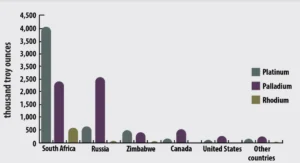
Is the world running out of platinum? Regardless of who you ask, the question raises eyebrows and serious conversations about operating costs, infrastructure challenges, and mine closures.
It turns out that South Africa’s platinum supply dominance[1], which accounts for 70–75% of global production, has become a vulnerability that has thrust the market into a state of panic. Platinum output has been eroding for over twenty years, and the country’s mining industry has now entered a phase of irreversible decline.[2]
“The global platinum market faces unprecedented structural imbalances that extend far beyond typical commodity cycles. Current supply-demand dynamics reveal a critical shortage exceeding 1 million ounces annually, representing approximately 13% of total global consumption. This platinum supply deficit stems from declining primary production capacity, concentrated geographic supply sources, and evolving industrial demand patterns that traditional market mechanisms cannot quickly resolve.”[3]
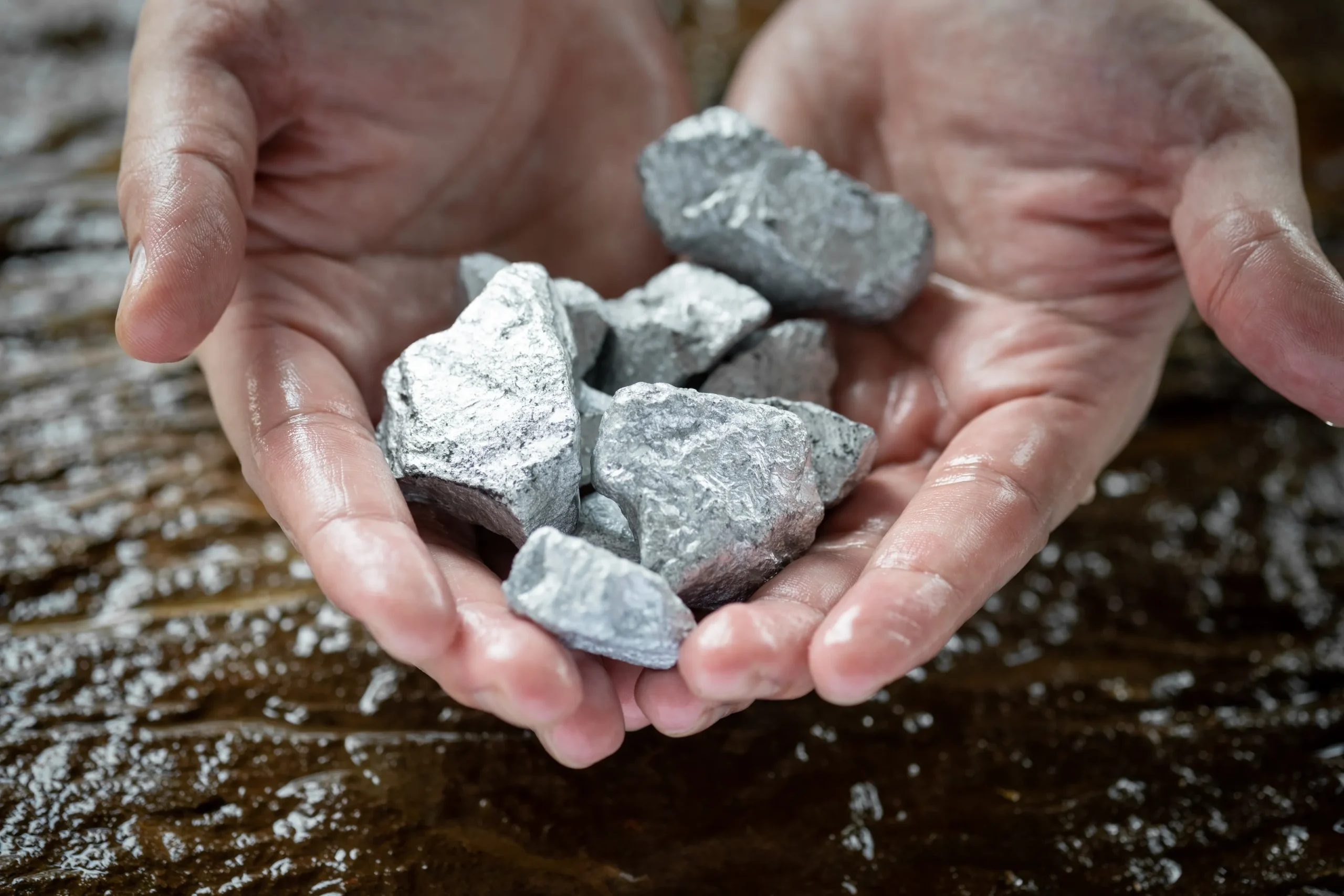
Platinum is an exceedingly rare metal and much of the world’s supply lies deep underground. Not only does the mining process require the use of explosives and blasting but after the rock is hauled to the surface — it must undergo a complex and expensive ritual of crushing, milling and refinement.
“Refining platinum ore is a costly and laborious process. It can take from eight weeks to six months to process a batch of ore, and it can take up to 12 tons (11 tonnes) of ore to produce a single troy ounce of platinum.”[4]
While gold is often viewed as scarce, platinum is far rarer. For every platinum mine in operation, there are about ten active gold mines. And while all the gold ever mined in the world would fit into a 75 ft cube, all the platinum ever produced would fit into a cube just 25 ft across.
The Bull Case for Platinum
After years of declining mine output, scant inventory, and persistent supply deficits — platinum has evolved into a rare value proposition for investors. Along with supply shortages, the precious metal is experiencing rising demand from both the automative and industrial sector.
It is widely used in catalytic converters, manufacturing, jewelry and hydrogen energy, a clean burning fuel where the only by-product is water. It is seen by many as a viable energy source to reduce emissions and decarbonize heavy industry.
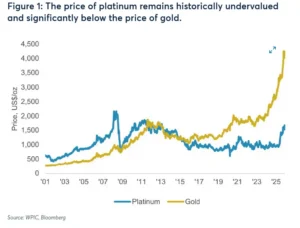 And yet, platinum is less than half the price of gold and many experts believe it is historically undervalued.
CME Group, the world’s leading derivatives marketplace, made the case for acquiring platinum in December:
“The investment case for platinum remains compelling. The market is forecast to record its third consecutive significant annual deficit in 2025 … which will deplete above ground stocks (AGS) to only five months of demand cover. Although high prices typically encourage markets to self-solve for structural deficits by either incentivizing new supply or pricing demand out of the market, history shows that both platinum supply and platinum demand can be remarkably price inelastic … The World Platinum Investment Council’s two-to-five-year platinum market forecast anticipates that AGS will be substantially depleted by the end of the decade, as diverse and resilient demand continues to outstrip constrained supply.” [5]
It’s important to remember that platinum is a precious metal that offers both inflation protection and portfolio diversification. And for investors looking beyond stocks, bonds, and even gold — platinum deserves serious consideration.
Investing in Platinum
Investors have several ways to gain exposure to platinum. Mining stocks can provide leverage to rising prices but also introduce company-specific risks such as operating costs, labor disruptions, and geopolitical uncertainty. Exchange-traded funds (ETFs) offer convenience and liquidity but do not provide direct ownership of the metal itself.
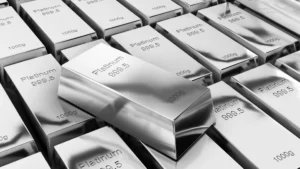 For investors seeking tangible ownership, platinum bullion coins and bars are the most direct way to participate in the market. Physical platinum is recognized worldwide, carries no counterparty risk, and can be held directly or within a self-directed retirement account.
Popular investment-grade platinum coins include the American Platinum Eagle, Canadian Platinum Maple Leaf, British Platinum Britannia, and Austrian Platinum Philharmonic. Investors may also purchase platinum bars in sizes ranging from 1 gram to 1 kilogram.
When you consider platinum’s extreme rarity, years of supply deficits, shrinking above-ground inventories, growing industrial demand, and a price that remains well below gold — it becomes clear that this metal may be one of the market’s most overlooked opportunities. In most commodity markets, higher prices attract new production. Platinum, however, is proving to be the exception. And that may be precisely what makes the investment case so very compelling.
ORION METAL EXCHANGE is a Top-Rated Precious Metals Dealer
With Live Pricing, Low Commissions
and Best-in-Class CUSTOMER SERVICE.
Call for a FREE Investor Kit and up to $30K in FREE metals (on qualifying purchases).
REPRESENTATIVES ARE AVAILABLE NOW AT: 1-800-559-0088
1 https://natural-resources.canada.ca/minerals-mining/mining-data-statistics-analysis/minerals-metals-facts/platinum-facts
2 https://www.reuters.com/markets/commodities/south-africas-platinum-mining-industry-terminal-decline-northam-ceo-says-2024-08-30/
3 https://discoveryalert.com.au/platinum-supply-crisis-2026-economic-market-implications/
4 https://www.thenaturalsapphirecompany.com/education/precious-metal-mining-refining-techniques/platinum-mining-refining/
5 https://www.cmegroup.com/articles/2025/whats-next-for-platinum-investment.html